
SARS new online process: progress and limits
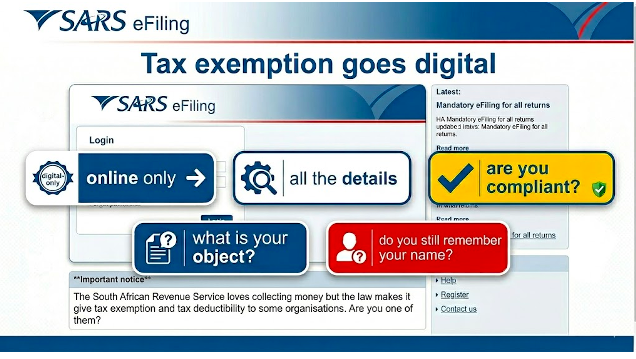
As mentioned in our September 2025 ngoLAWBrief, the new SARS online PBO application service went live for the public on 1 March 2026. This new service means that, while new applications lodged via email or courier prior to 1 February 2026 (when ‘manual’ services were closed) will still be processed ‘manually’, from 1 March 2026 the only way to apply for any type of income tax exemption is via the SARS e-filing platform.
The major impacts of the transition are, in our experience so far:
1. Speed
- Then: the promised turnaround time under the old system as 52 working days (2 months) but actual turnaround was closer to 6 months.
- Now: The promised turnaround is 21 working days, but actual turnaround (from lodging to granting or to receipt of a query) is anywhere between 24 hours and 1 week! We suspect that the current lightning-fast times are partly due to the newness of the system, and that those who only make these applications intermittently will still be figuring out how to navigate the new system.
We were fortunate to be part of the SARS testing phase, so were guided through some test applications made.
2. Fewer documents to upload
- The EI1 is no longer required, as it is now an online form;
- SARS Registered Representative documents do not have to be lodged, as the Registered Representative must be appointed (and the efiling profile set up) before an application can be made;
- For NPCs, there is a link to the CIPC system, so no CIPC documents verifying directors need be uploaded.
3. Bank account required
- Under the manual system, the application could be processed prior to the opening of a bank account.
- Under the online system, banking details are mandatory, and the application cannot proceed without them.
4. More information needed: some examples
- The old application form had space for just three governing body members details -- the new process requires that all of the board’s details are recorded
- You need to figure out and include the ‘sector code’ for the work of the organisation (not too easy to figure out!)
- You include a declaration that no board members have been disqualified from service on a board;
- It requires information on whether the organisation conducts certain activities outside of SA (to figure out whether NPO status is compulsory)
From the coalface
We can report that there have been hiccups and technical issues and some of these are yet to be ironed out. But, in comparison with systems rolled out by other departments (DSD!) and considering the complexity of the exemption laws and the variables to be taken into account, SARS has really put their back into the testing and refining, and taking comments and input.
New applications for NPCs are working really well, with the odd hitch when drawing details from CIPC. We are finding that applications to update documents and details (such as an amended founding document, or a request to add another status) are not as seamless, and some of these seem to be getting stuck.
The new system does not yet allow appeals and objections to be captured (these must still be lodged via email).
We will keep you posted on progress and any new information on this score.
Originally puplushed in ngoLAWBrief, Q1 2026.
Nicole Copley

Related articles
The crucial role of donations receipting in NPOs: Streamlining the process with ActiveDonor

The ABC’s of taxes in the non-profit sector

Taking Steps to Support NPO Financial Literacy
